OVERVIEW
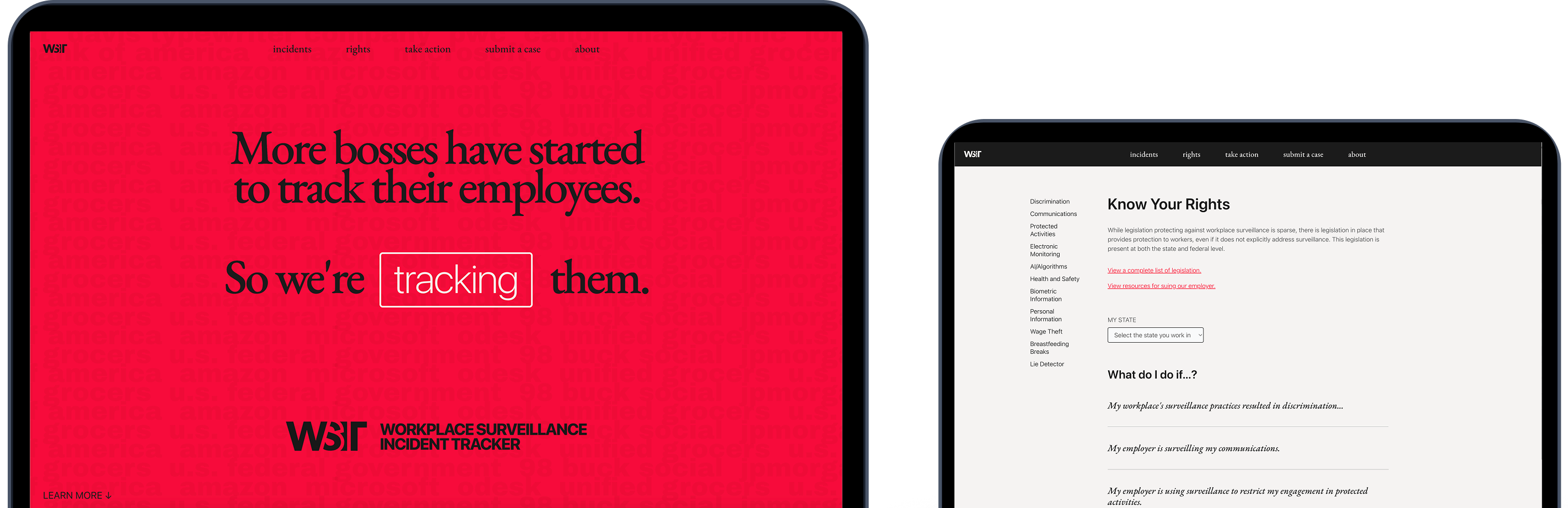
Workplace Surveillance Incident Tracker
SUMMER 2025
Under the direction of CMU’s Human-Computer Interaction Institute, I was tasked with the complete design and implementation of a tracker to serve as a resource for employees, researchers and policymakers about current surveillance practices and help them to take action.
TOOLS:
FIGMA, NEXTJS, AIRTABLE
PEOPLE:
MORGAN MCERLEAN, CELLA SUM
QUESTION
How do we help workers in a period of increasing workplace surveillance?
This stood at the core of our research.
In an age of “bossware” proliferation, employees often find themselves under different surveillance technologies that cause harm, ranging from violations of health and safety concerns, to disciplinary action. While workplace surveillance has become increasingly common, little pressure has been placed on employers’ invasive surveillance practices and little support has been provided to help workers experiencing such surveillance.
The first part of our research was creating a centralized database to collect reports of workplace surveillance across the country. Sifting through 3,000 articles, MM and I catalogued cases that fell under the scope of workplace surveillance occurring US that recorded the explicit perpetrator and the type of surveillance imposed.
After creating a database of more than 250 cases, we developed a taxonomy to better trace patterns and characteristics of workplace surveillance. This required reducing the device/mode, information collected, and surveillance harm into contained categories to better label each recorded case. This taxonomy is later detailed in a section of the final tool/website.
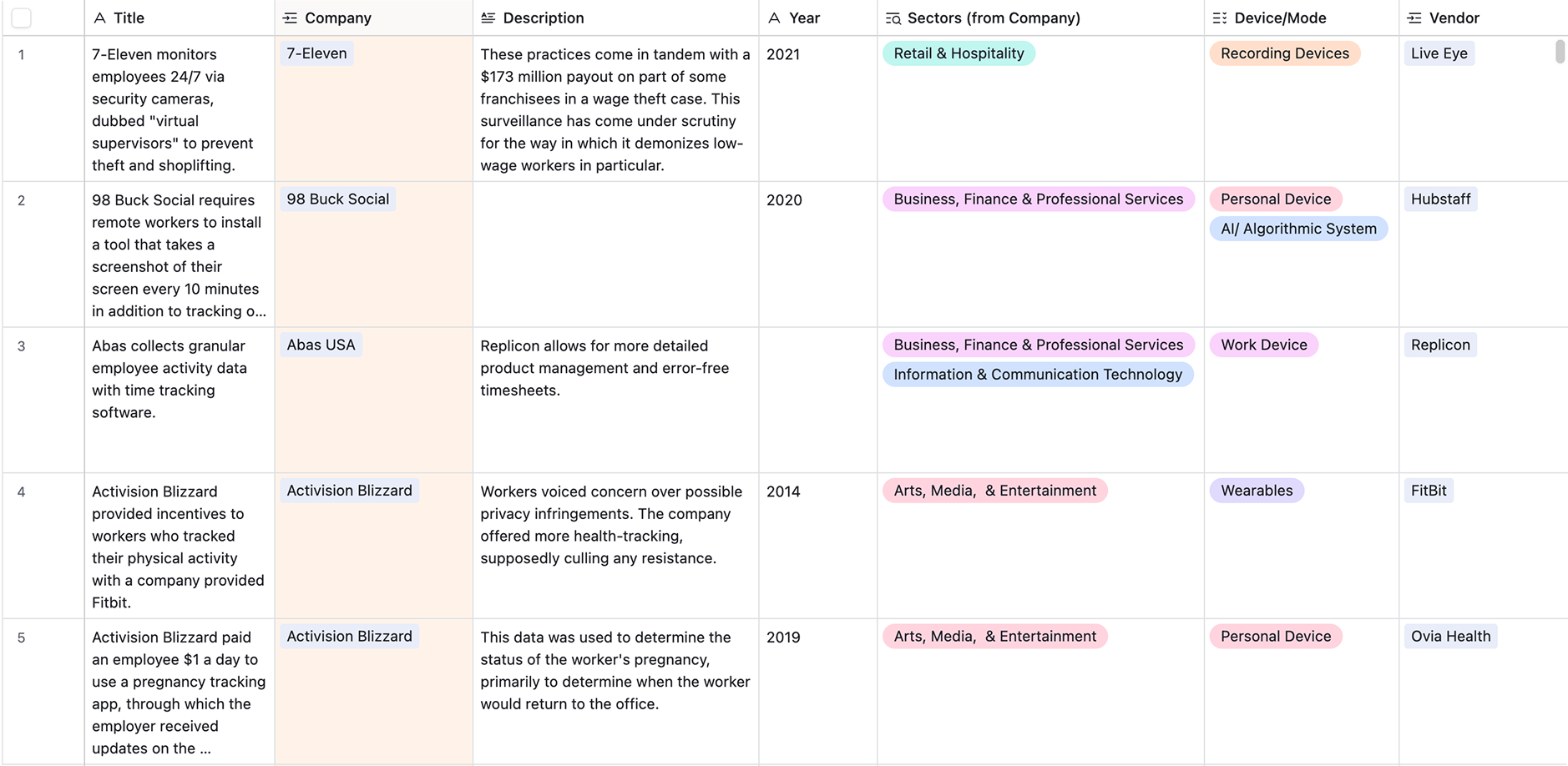
Part of the 250+ cases collected and catalogues in the backend database
CORE FEATURES
Determining components of our tool
We needed to figure out what exactly our tool would entail. What types of resources would be helpful for workers experiencing workplace surveillance? How do we make a database that is navigable and accessible? What parts of the research process and taxonomy should be explained?
At the center: How do we build trust?
Building from a skeleton
We were provided a limited prototype that served as a starting point for our core features.
Using this as a baseline in conjunction with the needs of workers, we expanded what features would be core to our tool.
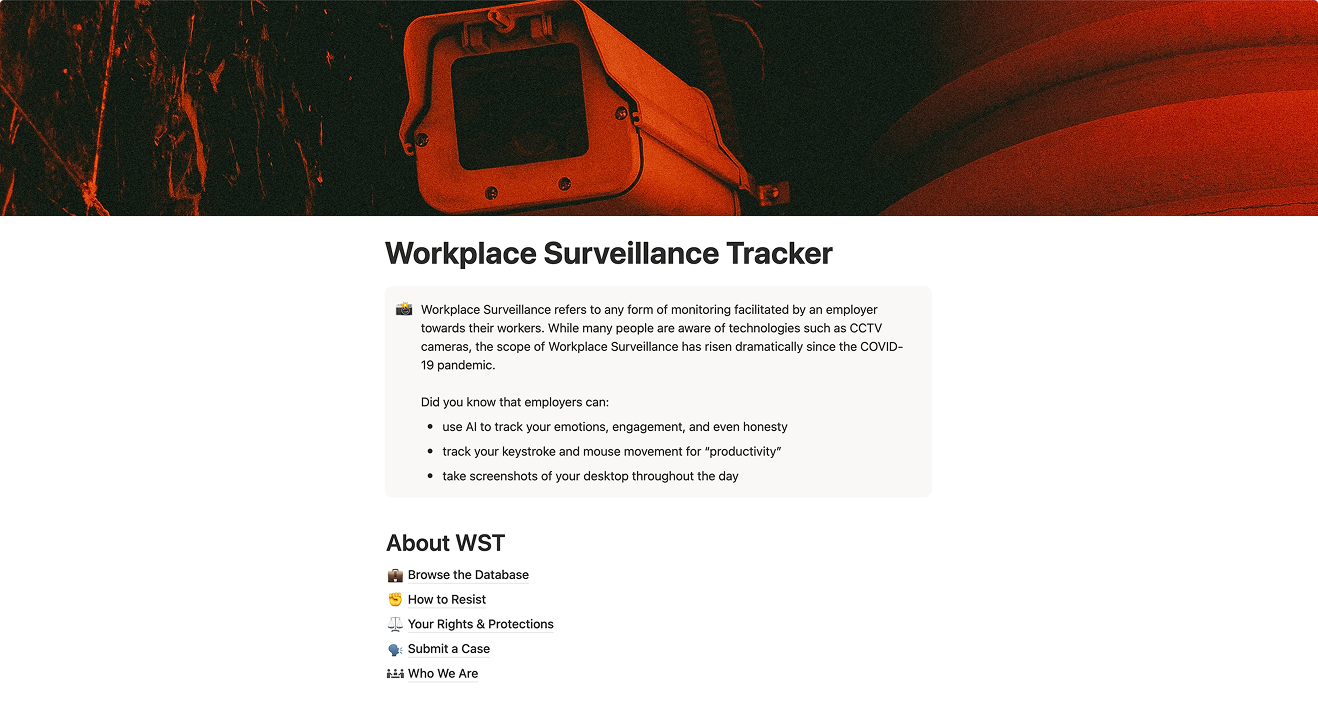
The “home page” of the skeleton Surveillance Tracker, created in Notion
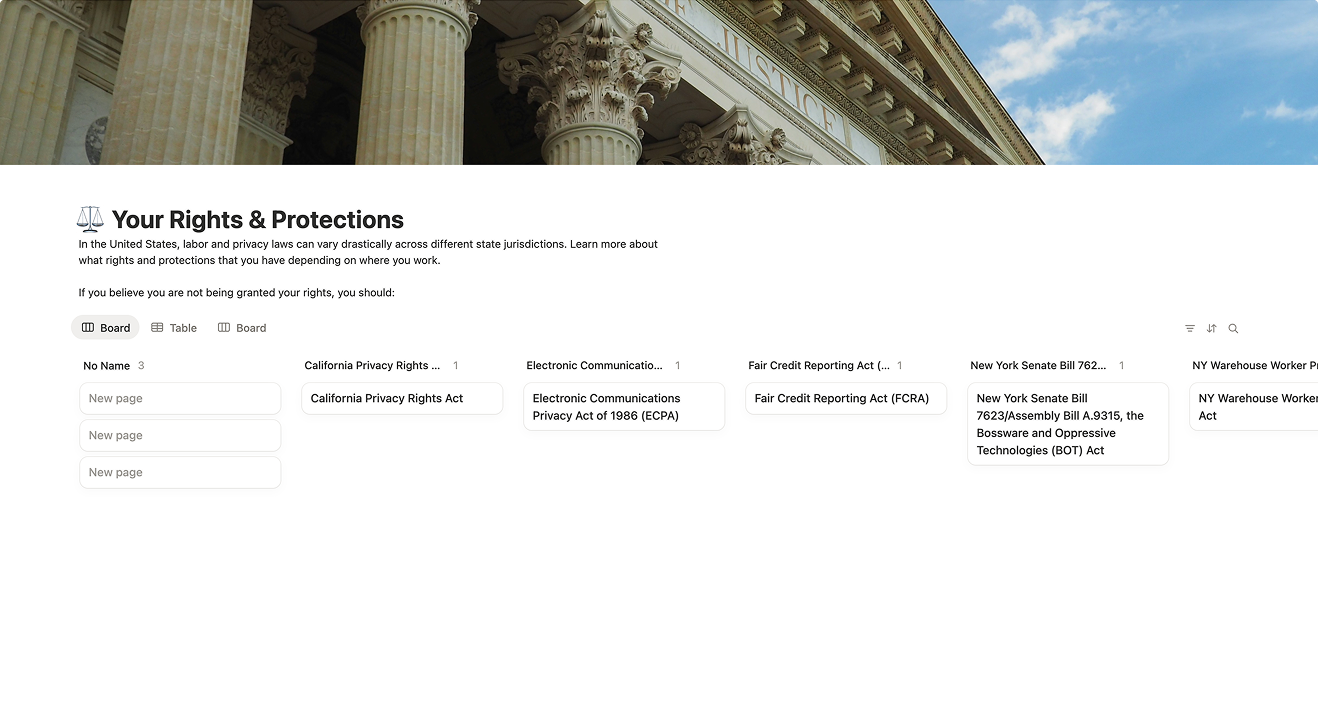
The “rights page” of the same prototype website
List of core features
The scope of this tool had to go beyond just a database. Alongside a searchable tracker, we had to provide corresponding patterns, definitions of taxonomy, and descriptions of research process. We also had to provide a dynamic list of rights specific to categorized circumstances and the users’ respective state legislation. Under the umbrella of “taking action”, we decided to address both short term and long term solutions, providing quick tips in addition to steps to taking legal action, organizing one’s workplace, and technology hacks to circumvent surveillance. Lastly, we had to provide an outlet to submit personal cases and gie context for the team behind this work to build further trust.
The enumerated features were detailed but deliberate, used to both inform and empower workers experiencing workplace surveillance.
FOUNDATION
A design language from scratch
I was given a lot of flexibility to create a design language for this tool. I quickly found myself turning to a palette of intensity that evokes ideas of surveillance, and typefaces that both complement each other and help create clear hierarchy of elements.
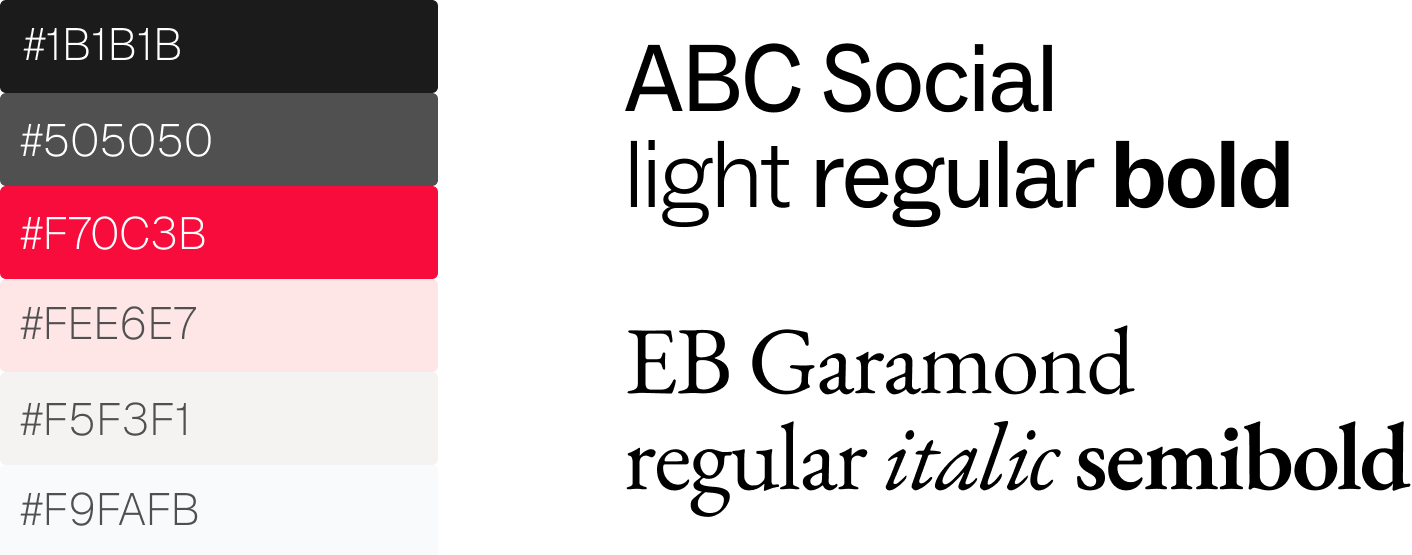
Standardizing color choices and typefaces
Information hierarcy
I also standardised the text hierarchy and set guidelines for the use of each type of text. This proved to be particularly helpful in making the depths of information manageable and organized.
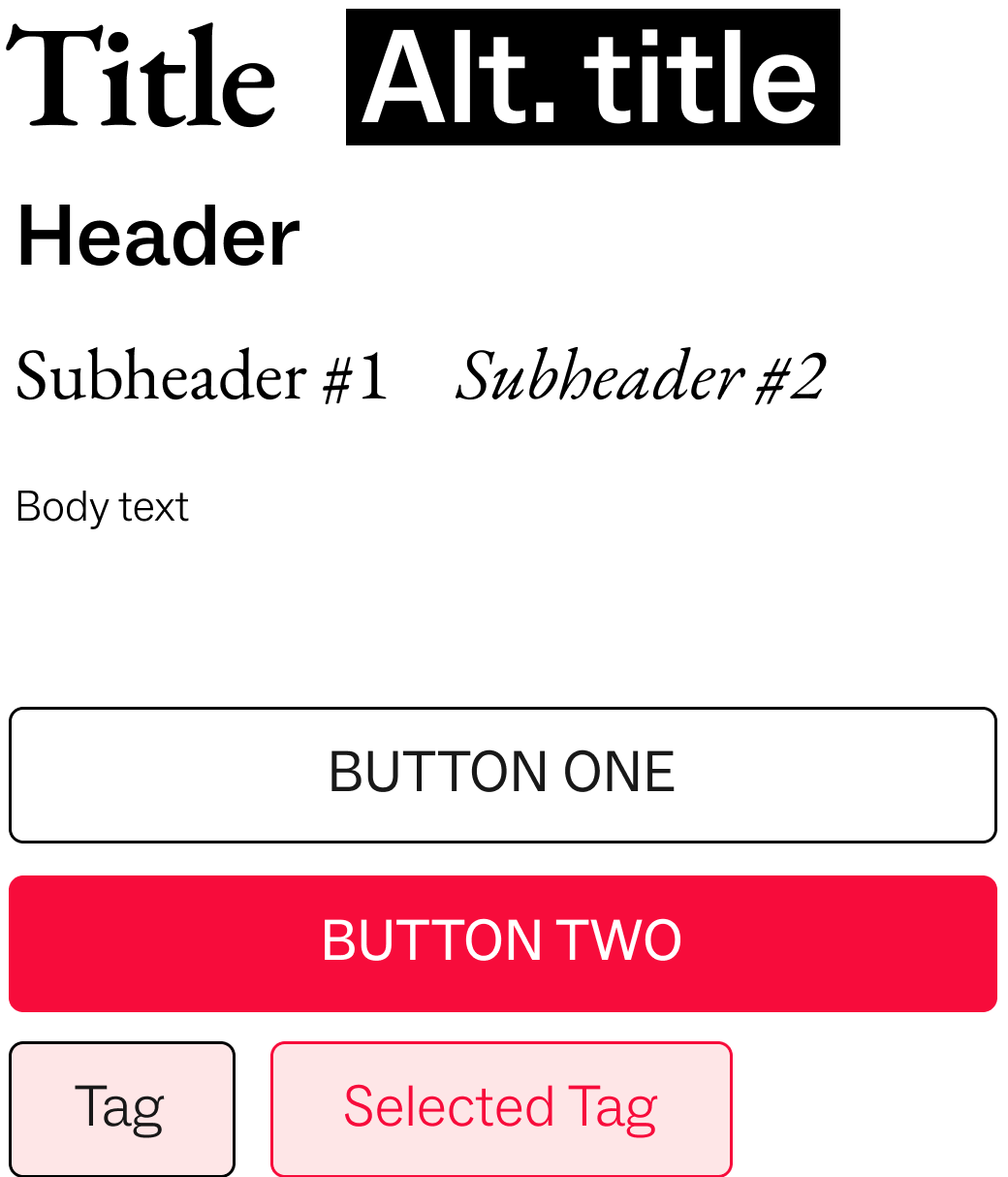
Creating hierarchies of text and buttons with intention
ORGANIZING DATA
Making information accessible
The rights page was particularly challenging to design with the amount of information that had to be clear and understandable. There were lists of both federal and state legislation pertaining to surveillance, all of which targeted different aspects of surveillance.
Thus, we decided to organise legislation by scenario AND specific state. This best allowed users to quickly find relevant legislation for their personal experience, as supposed to having to comb through a cumulative list of all legislation.
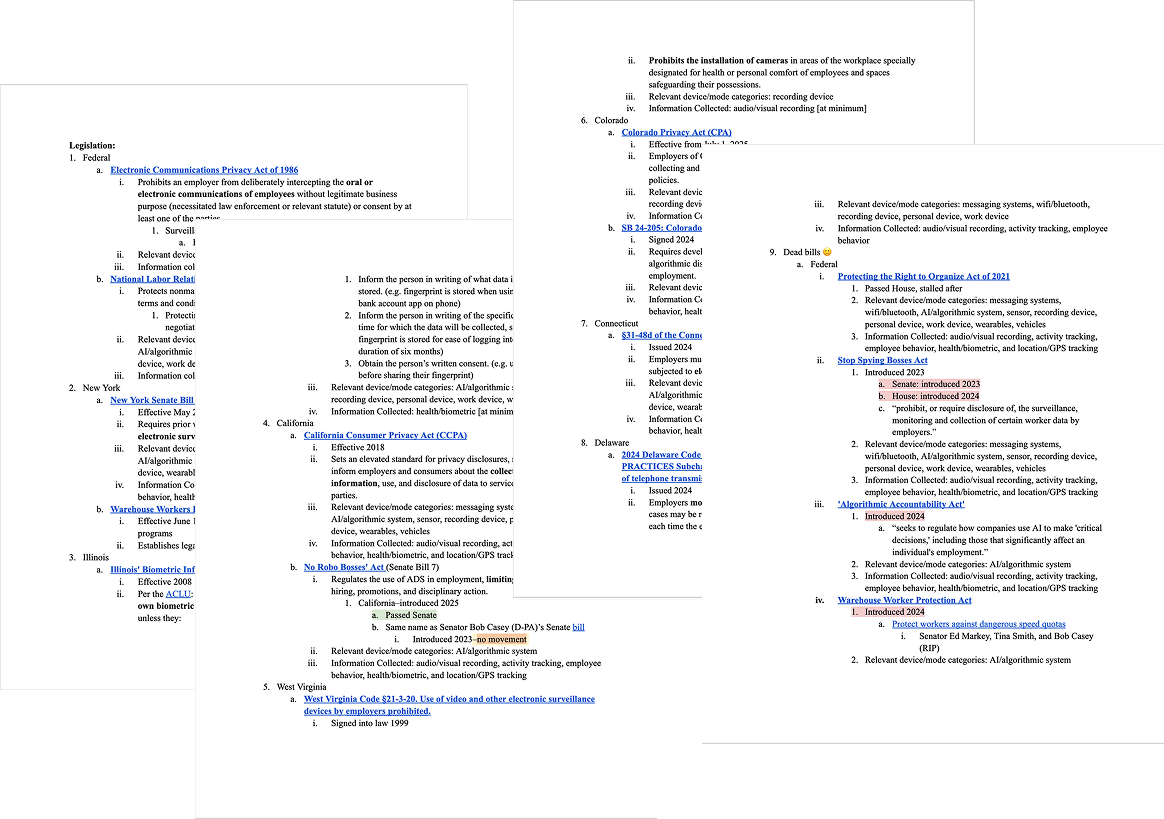
A fraction of the content needed to be put on the “rights” page
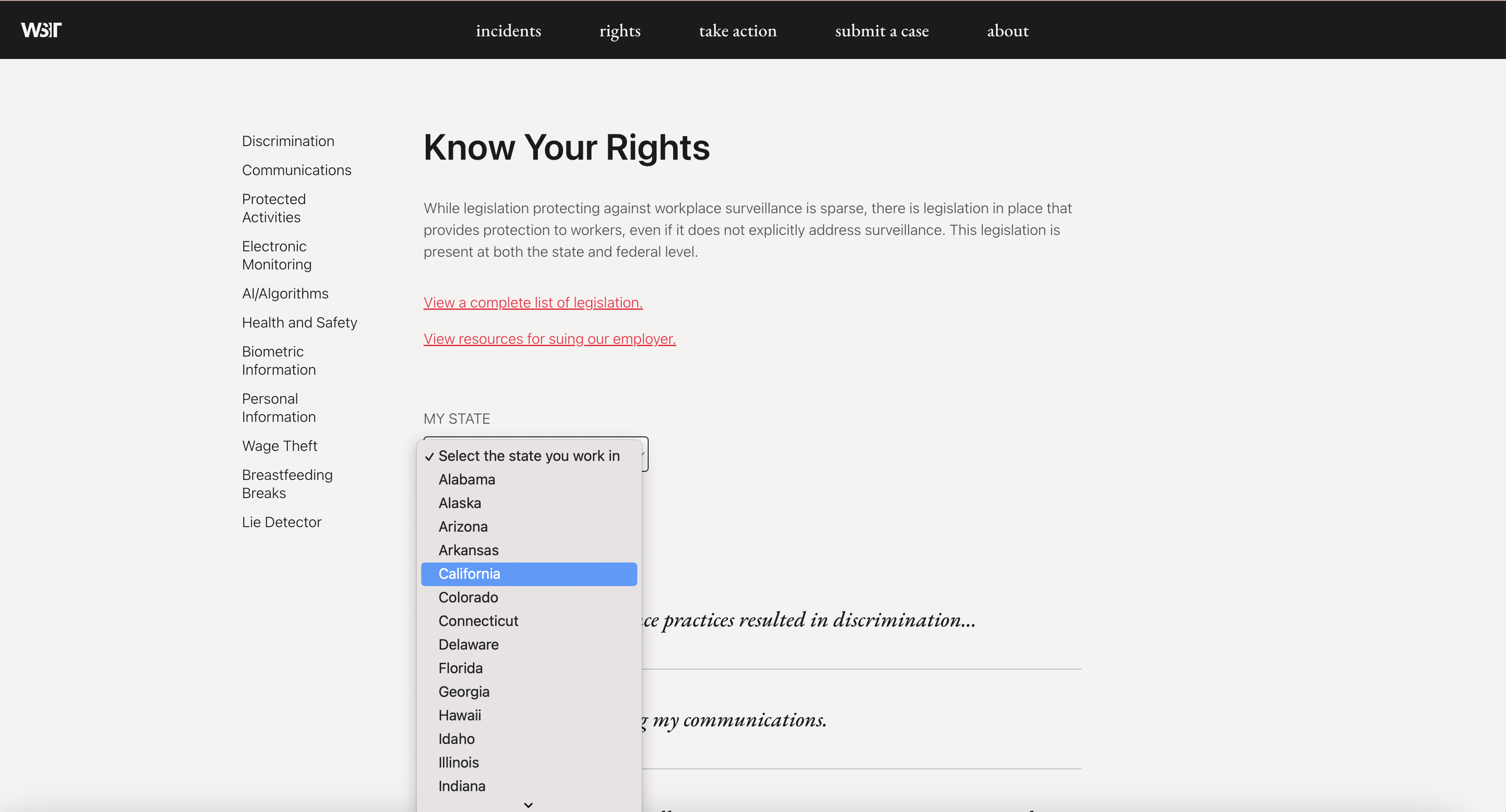
Selecting a state to find relevant federal and state legislation
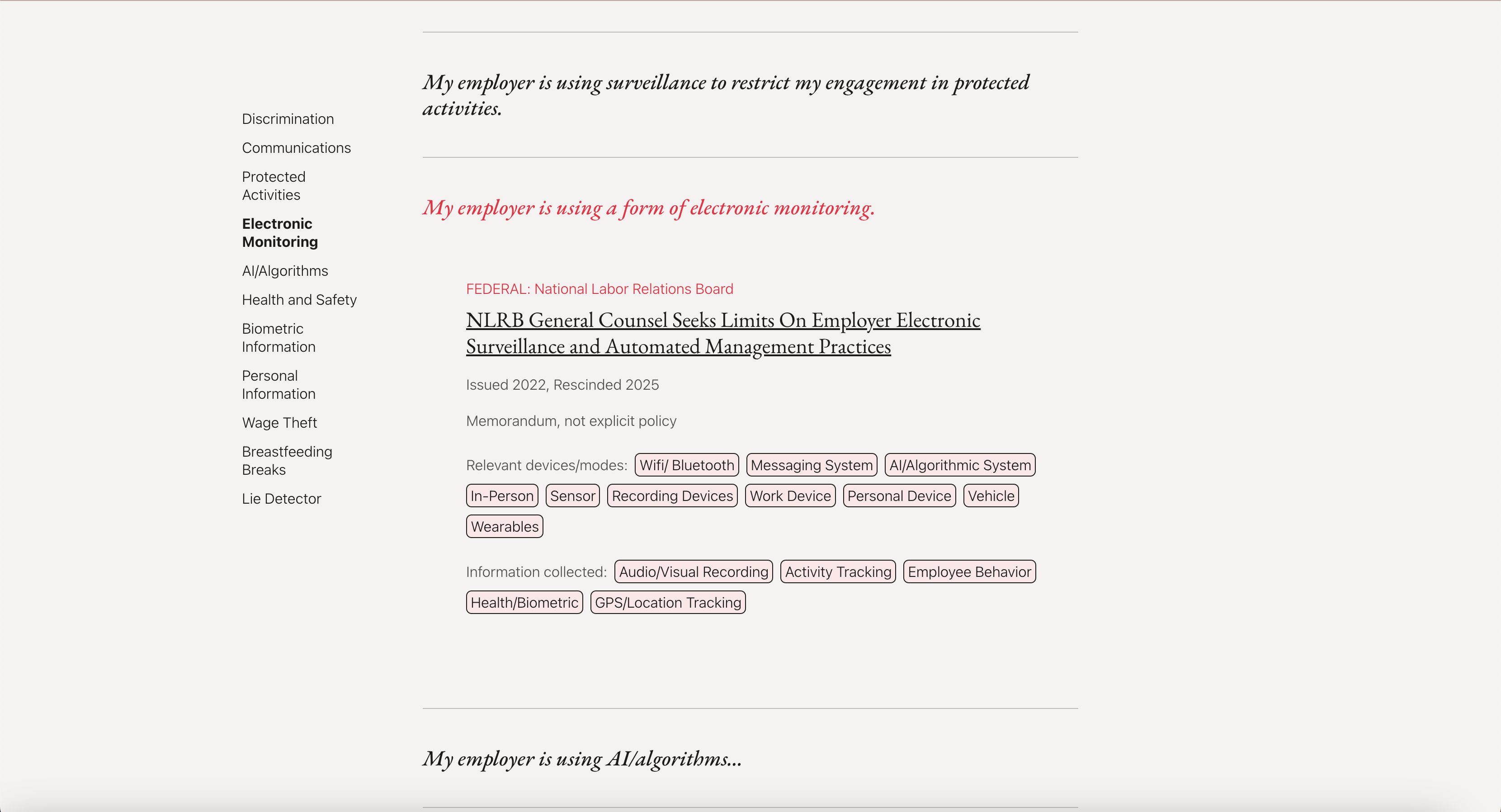
Example legislative results under one surveillance scenario
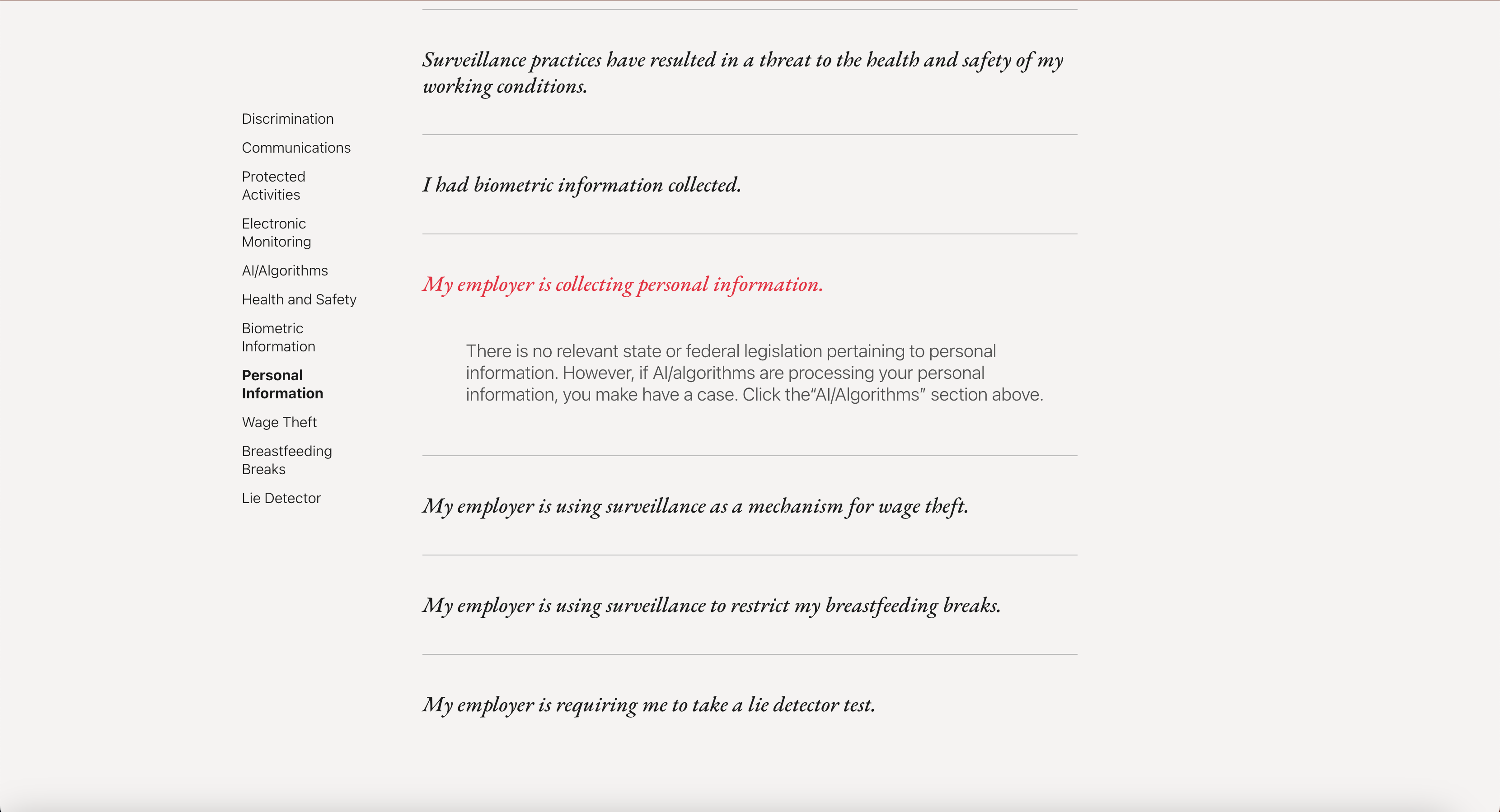
The case of having no relevant legislation
More data organization
The database of 250+ cases needed to be better than a simple spreadsheet. This meant translating rows into dynamic, searchable cards and designing a standard template for individual cases.
This was the most significant portion of the tool, and thus required significant attention to make sure it was a database easy navigable by all types of workers.
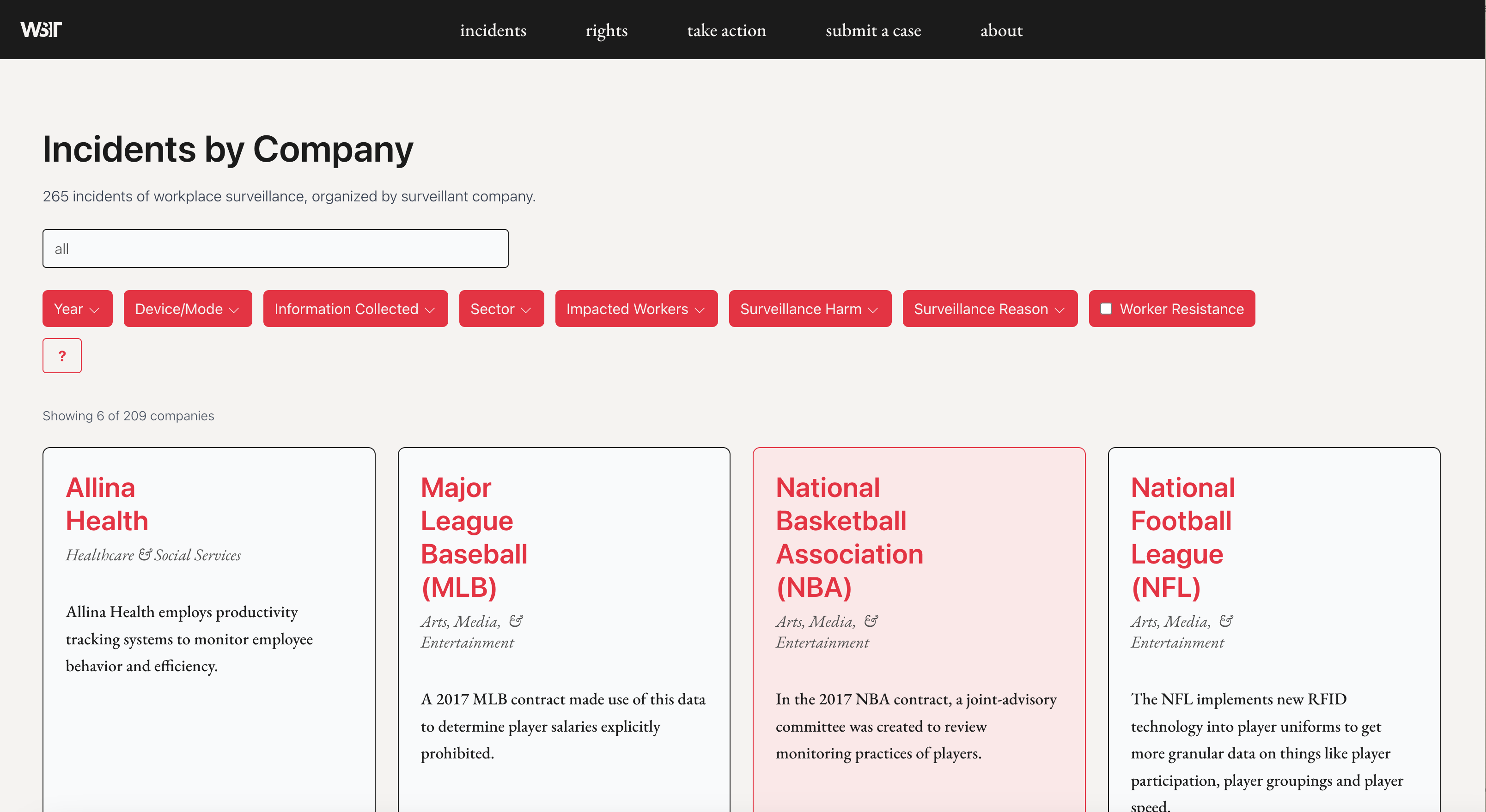
The final searchable database format. Note that software development limitations and concerns over copyright of images led to significant design limitations.
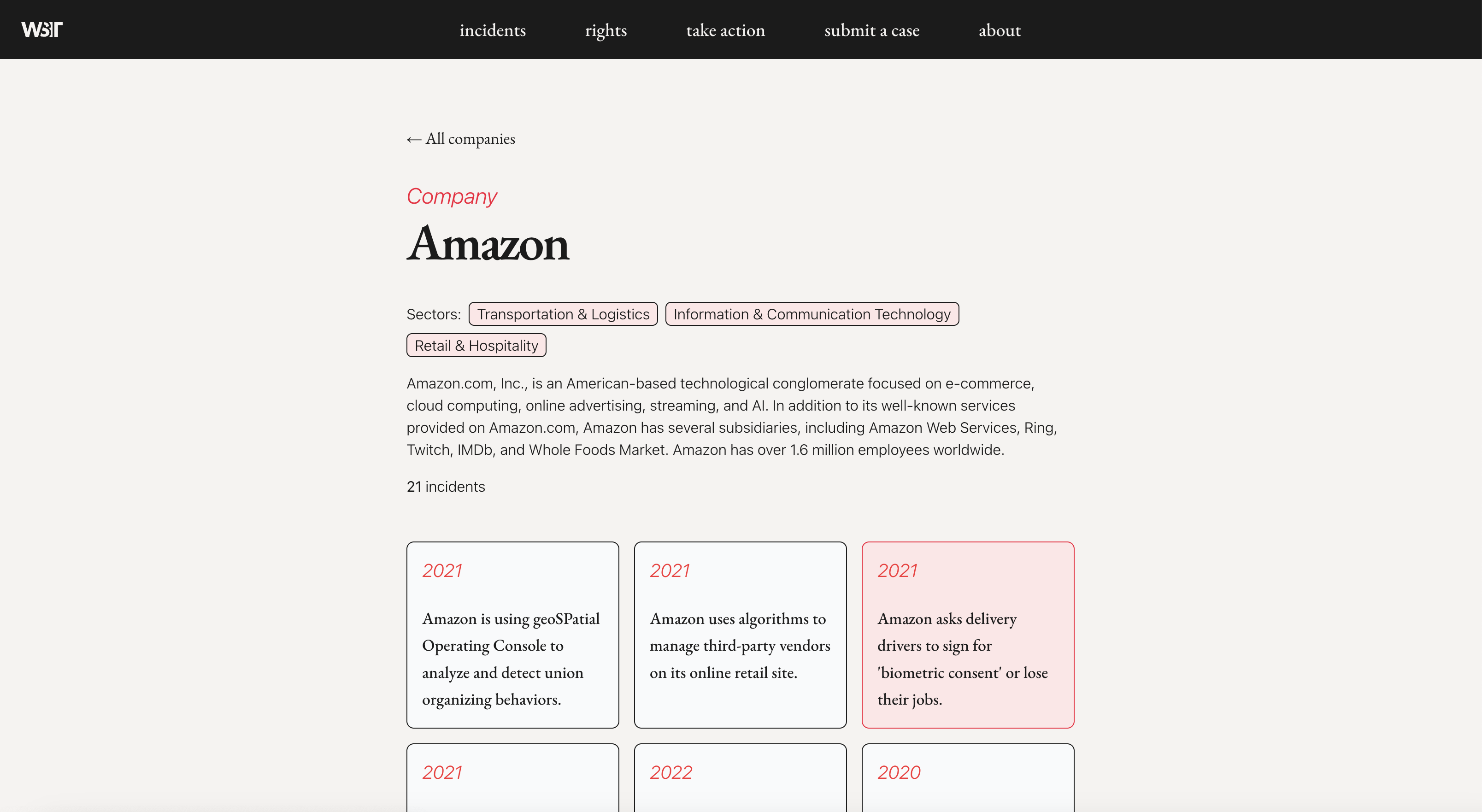
Individual page template for each perpetrating company
PILOT STUDIES
Iterating on the site
Over the course of two weeks, we conducted 8 pilot study interviews. Four interviews were with HCI/Security and Privacy researchers (at varying levels REU to postdoc), and the other half were with HCI researchers with various research focuses (worker advocacy, critical HCI, algorithmic harms, and tools for engaging with the physical world).
From the two weeks of interviews, there were a few major takeaways on ways in which the site needed to be improved.
More human
Interviewees felt the information was presented in a more sterile, research-oriented way than was necessary. They wanted to see a divergence away from this tone to one that centered apolitical but true information, seeing our job as developers of this tool to be honest with workers about their circumstances and avenues for change.
Similarly, they felt that the protoype's hero section was harsh, discomforting and confusing. While I had created the design with the intention of intensity, I veered too far from accessibility of the user.
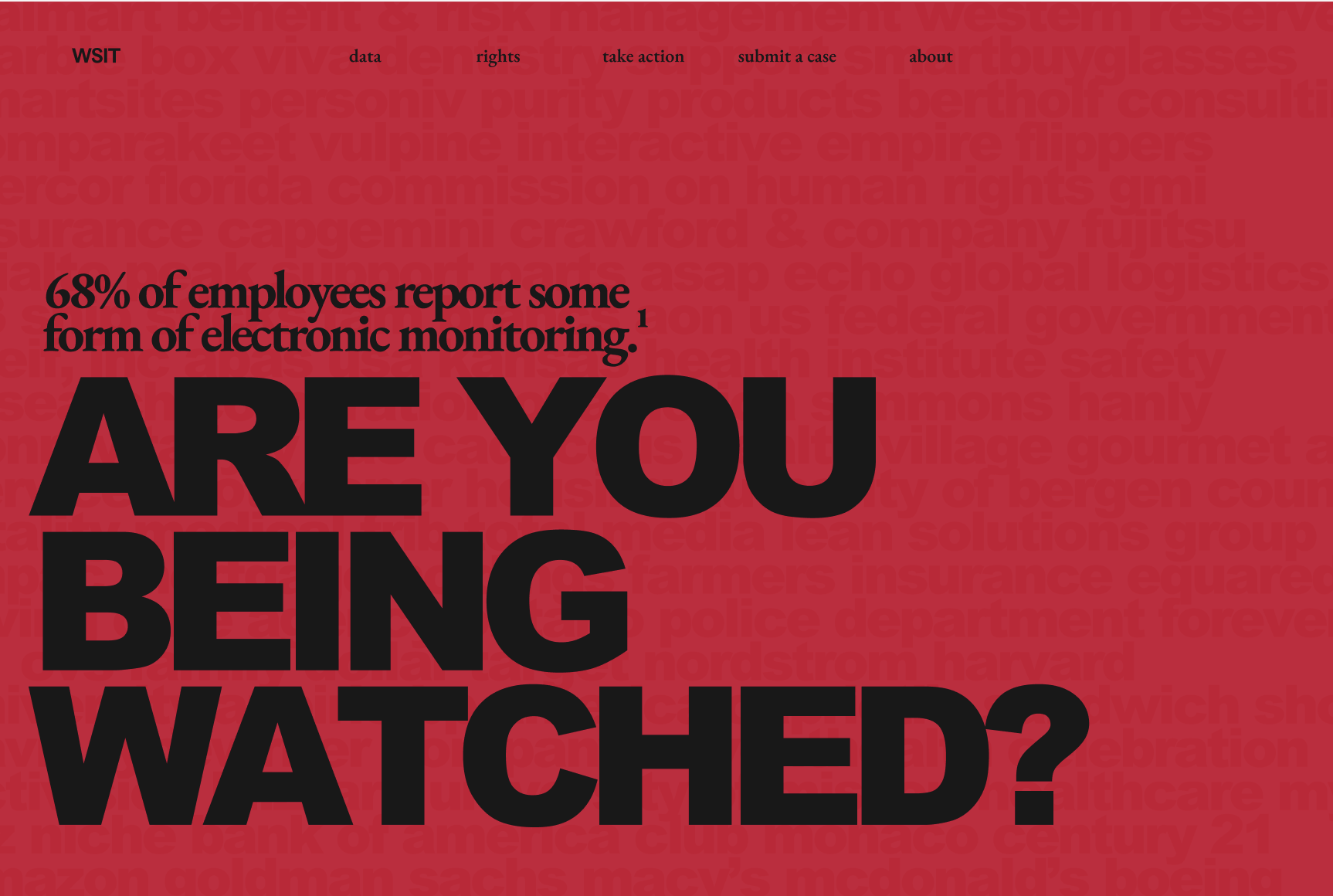
A confusing, intimidating first-prototype hero page
Center workers more prominently
In alignment with the previous overarching takeaway, the interviewees felt the need for workers to be centered more prominently by the site. Many voiced confusion over who the intended audience for this site was. This led us to reframe our approach, continually asking ourselves in revisions and iterations of the site: what are workers getting out of this? Through our improvements, we clarified and solidified our worker-centered approach.
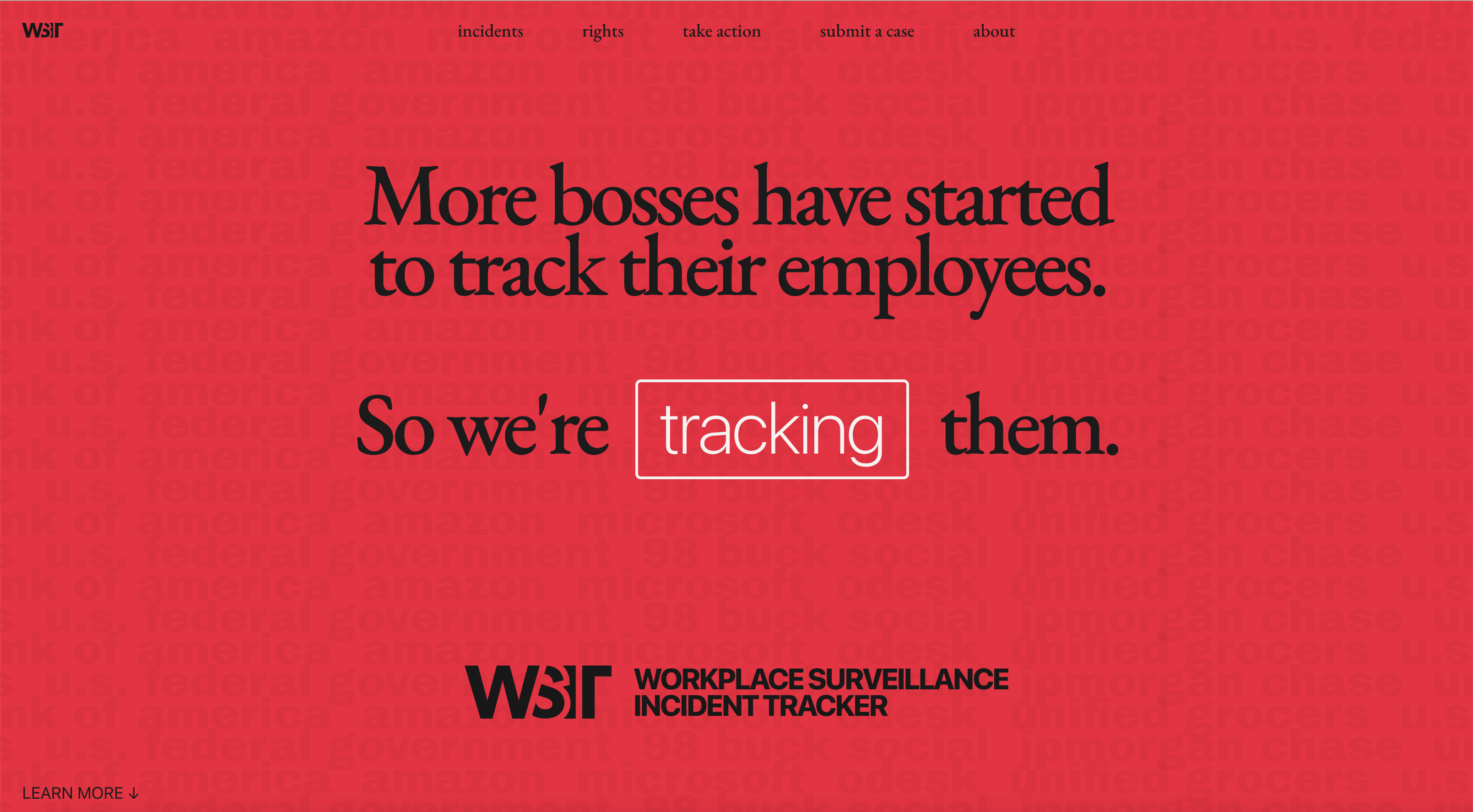
Updated hero page based on feedback from preliminary pilot studies
FINISH LINE
Completing Screens
Other screens received less scrutiny and experienced more minor visual and content adjustments. The design of each page worked circularly, being dependent on the precedent of pages before, but with the possibility to still modify past designs.
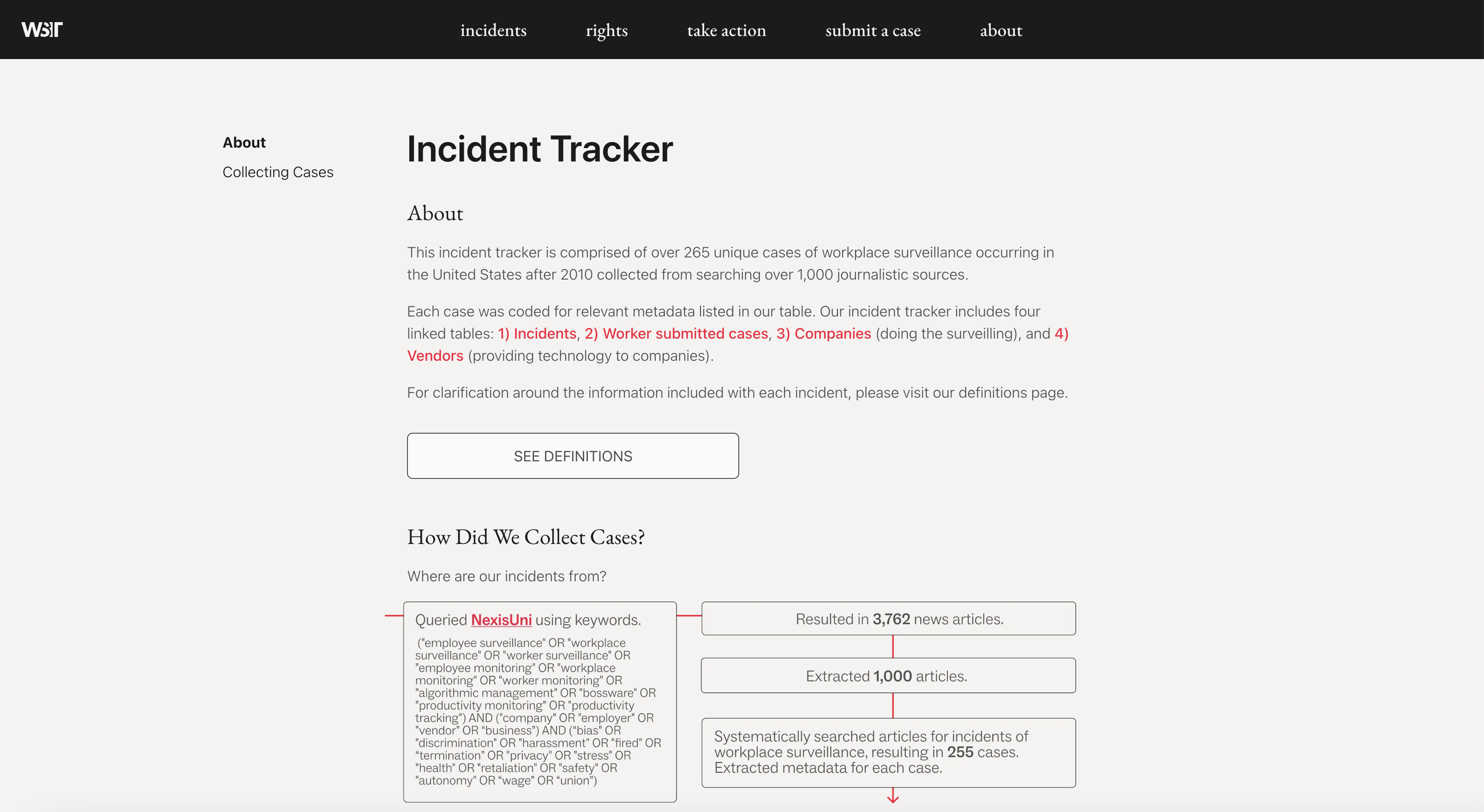
About page detailing the taxonomy and the process of creating the database and sifting the information
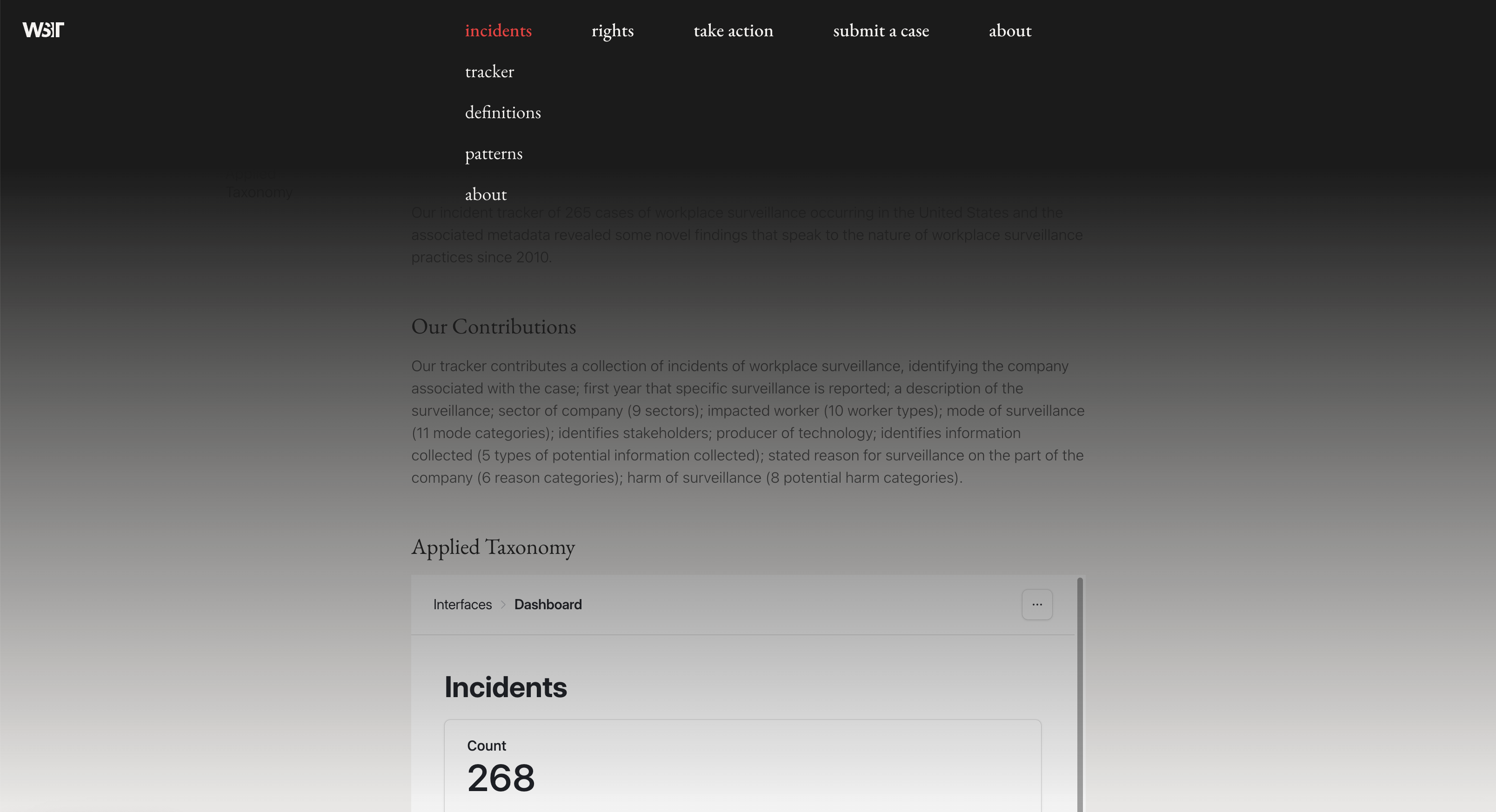
Navigation bar on non-home pages
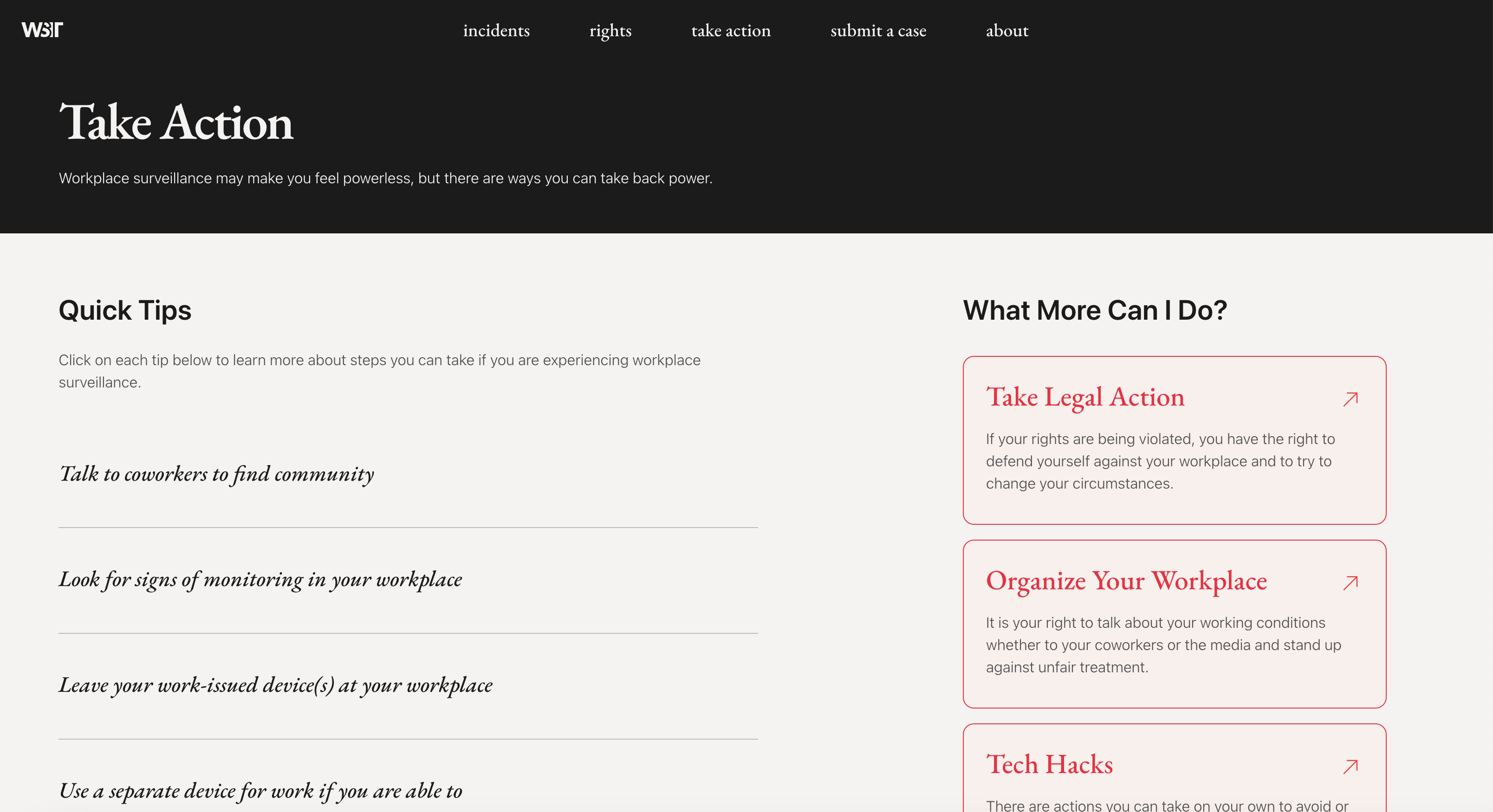
Take Action page providing both quick tips and full pages for long-term strategies. Following the existing language, this was difficult trying to balance both resources in one page
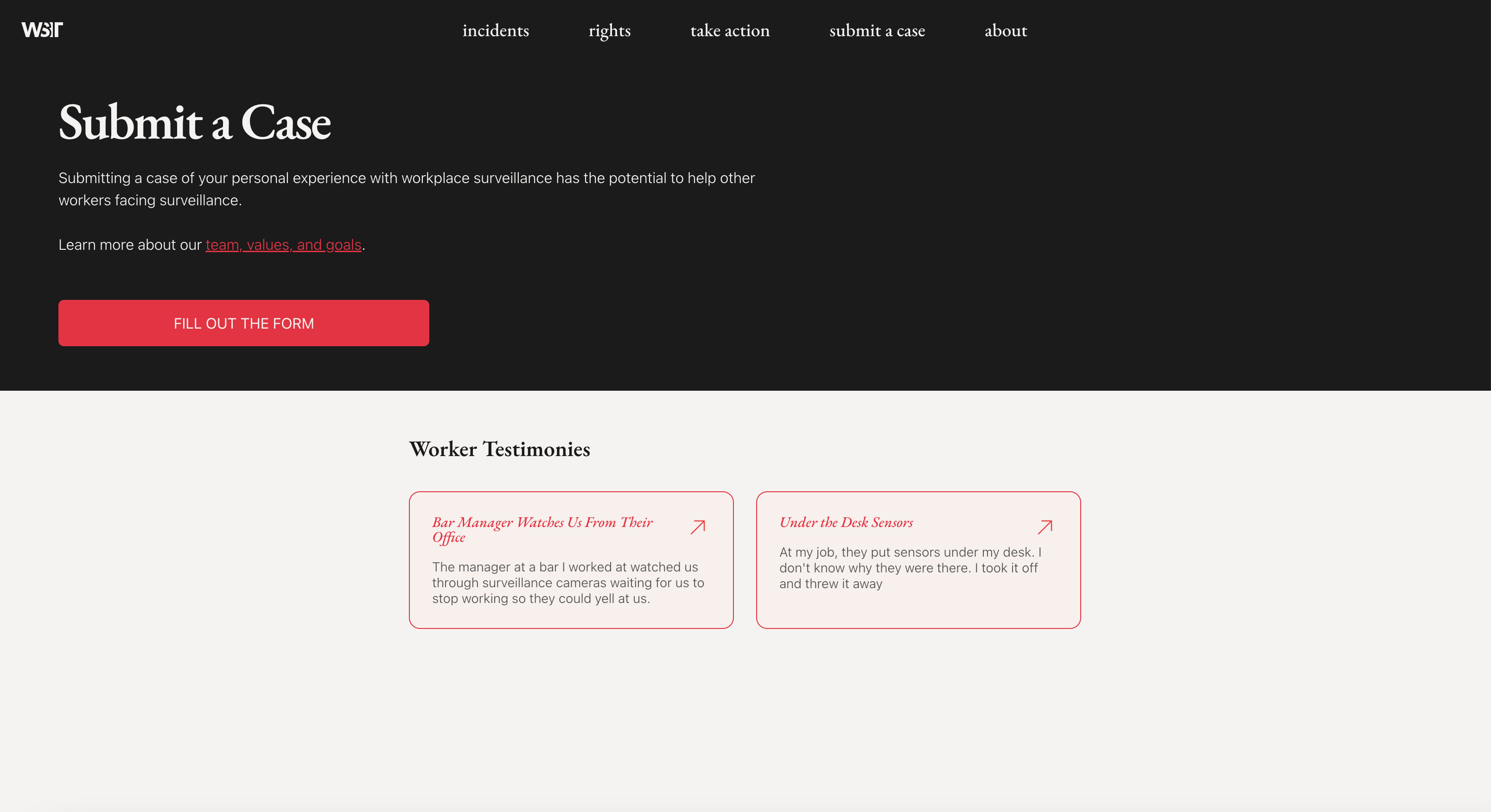
Page for submitting a personal incident
NOW
Continuing research
While the design is complete, my mentor, Cella Sum, is still completing work on the WSIT. In March, she is conducting a CMU workshop of workers, advocates, academics, and privacy and policy experts to further the iteration process, focusing on content to modify and other features to emphasize.
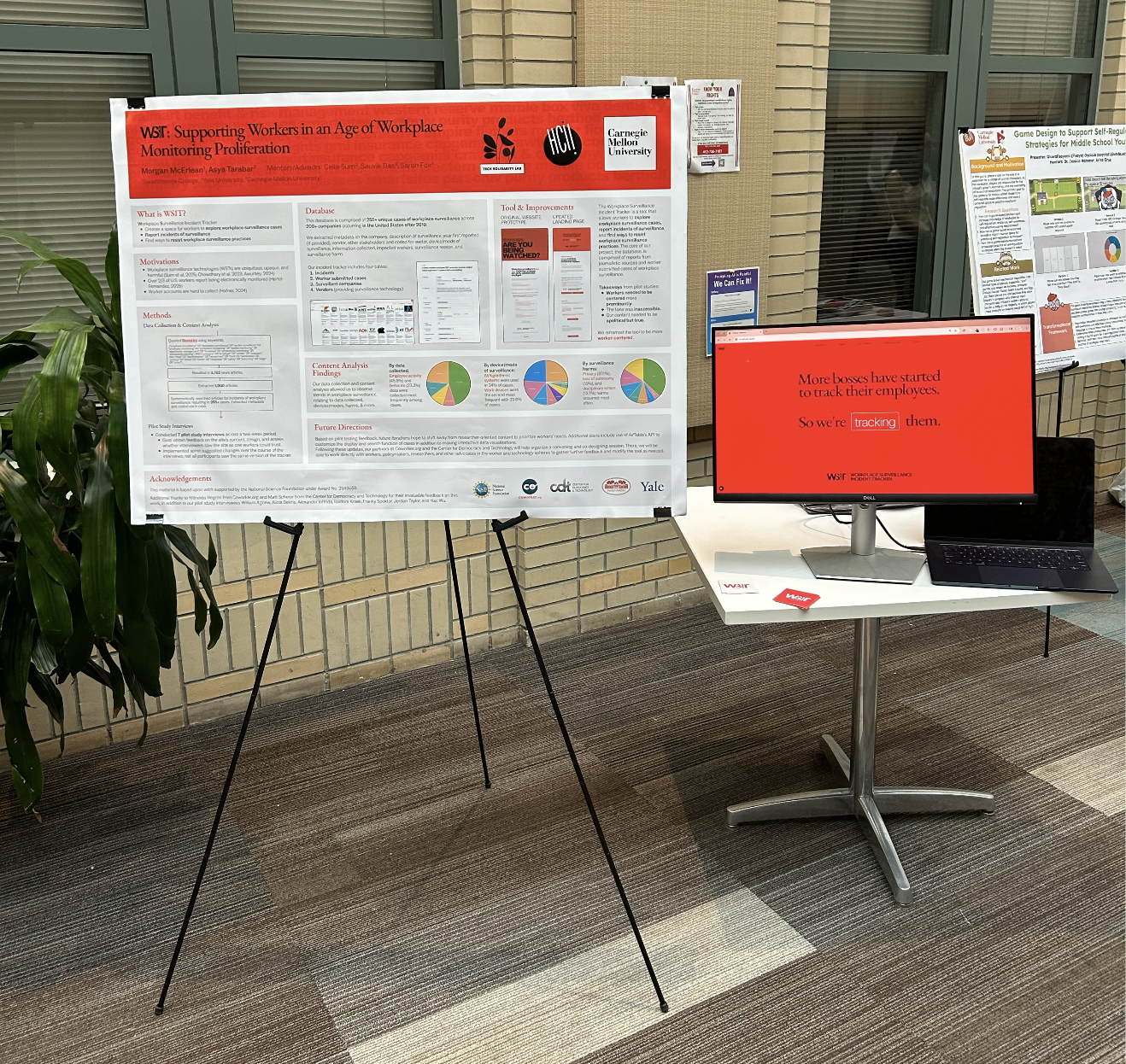
Presenting our research at the HCII summer poster session
Deployment: coming soon
The domain has already been purchased, and the website is soon to be deployed.
World of this tool has already been spread around to leaders of workers groups and grassroots groups fighting surveillance due to efforts of the lab and collaborative efforts between CS and said groups. Once online, WSIT will be a resource for those studying, fighting, and/or experiencing workplace surveillance and contibute to a greater momentum of change.
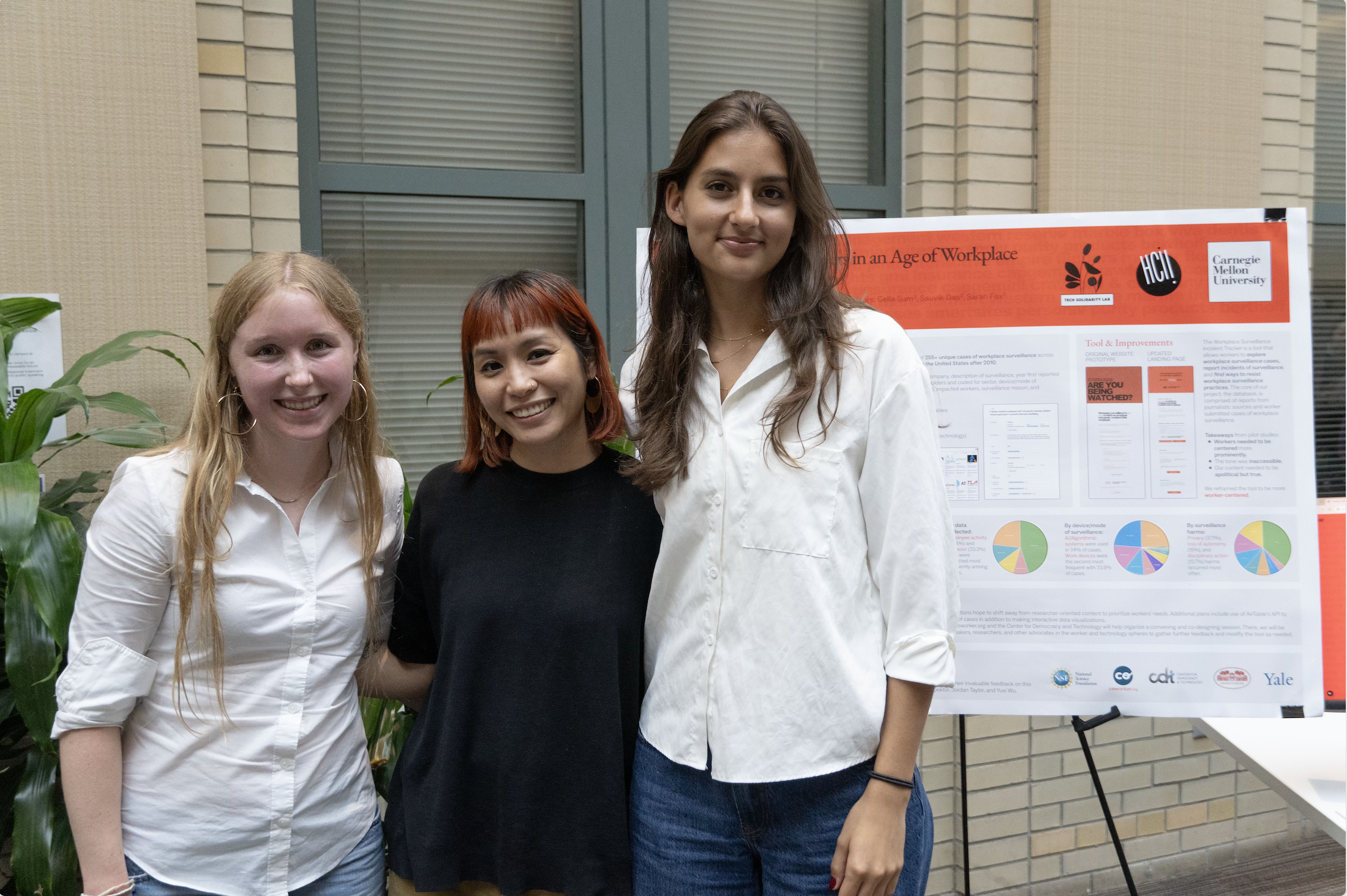
My team! Cella Sum and Morgan McErlean